
Weight the evidence.
Broader syntheses can help frame a question; individual studies can add detail. Neither removes the need to read methods and limitations.
Research / Methodology
Medical and performance information deserves context. This is how to read the sources, lab intervals and educational information presented across Manaforge.
From the actual application
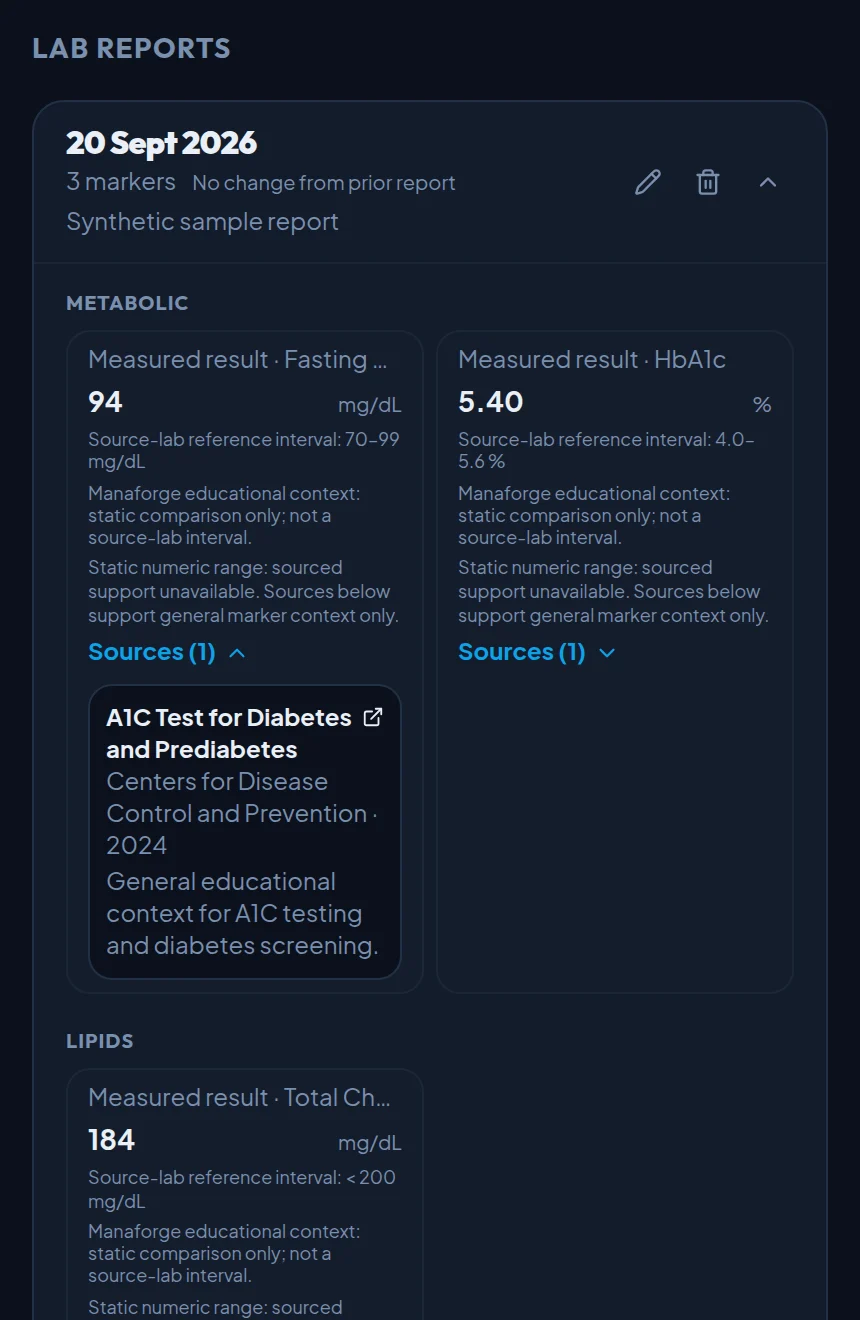
Sources should be chosen for the specific statement being made, not simply because they are prominent or recent. Consider whether the source actually studies the population, intervention or outcome in question, and whether its methods support the conclusion being drawn.
When reading a claim in a Research Note, follow its cited material where available. A citation is a starting point for checking a claim, not a guarantee that the claim applies to you.
Guidance from relevant professional bodies, systematic reviews and well-designed primary research can each be useful, depending on the claim. Study design, sample size, population, limitations and agreement with the wider evidence all matter. A single paper or abstract should not carry more weight than it earns.
Broader syntheses can help frame a question; individual studies can add detail. Neither removes the need to read methods and limitations.
A source about one population or outcome may not justify a broader statement about another. Keep conclusions as narrow as the evidence allows.
Reference intervals supplied by a source lab belong to that lab report. They should remain distinguishable from any educational context shown in Manaforge. Lab intervals can vary by method, lab and individual circumstances; a value outside an interval is not, by itself, a diagnosis.
Manaforge helps organize and review user-entered records. For interpretation or care decisions, review the original report and speak with an appropriate qualified clinician.
Research Notes are educational summaries, not individualized medical care. Where a note displays a source or review status, read that status as information about the note's publication or source-review state, not as certification of a clinical conclusion. Check the sources attached to the specific note and the scope of its claims.
Review information and a date reviewed, where displayed, help you understand when material was assessed. Research changes; older material may not reflect later evidence. Check the individual note for its displayed date rather than assuming every article was reviewed on the same schedule.
Educational information simplifies complex evidence. AI-generated information can be incomplete or incorrect, even when it refers to an athlete's history or a source. Independently verify important health information and involve an appropriate qualified professional in high-risk decisions.
See the Safety page for the limits of the platform and emergency guidance. If you spot a source problem or have a question about methodology, contact Manaforge.
Keep reading critically
Explore the notes behind the discussion, or ask us about a concern.