
03 / Progress
See the direction, not just the day.
Progress is rarely a straight line. Keep a history of your own changes and review it alongside training, nutrition and how you've been feeling—without letting one data point tell the whole story.
Genuine application UI · synthetic sample data
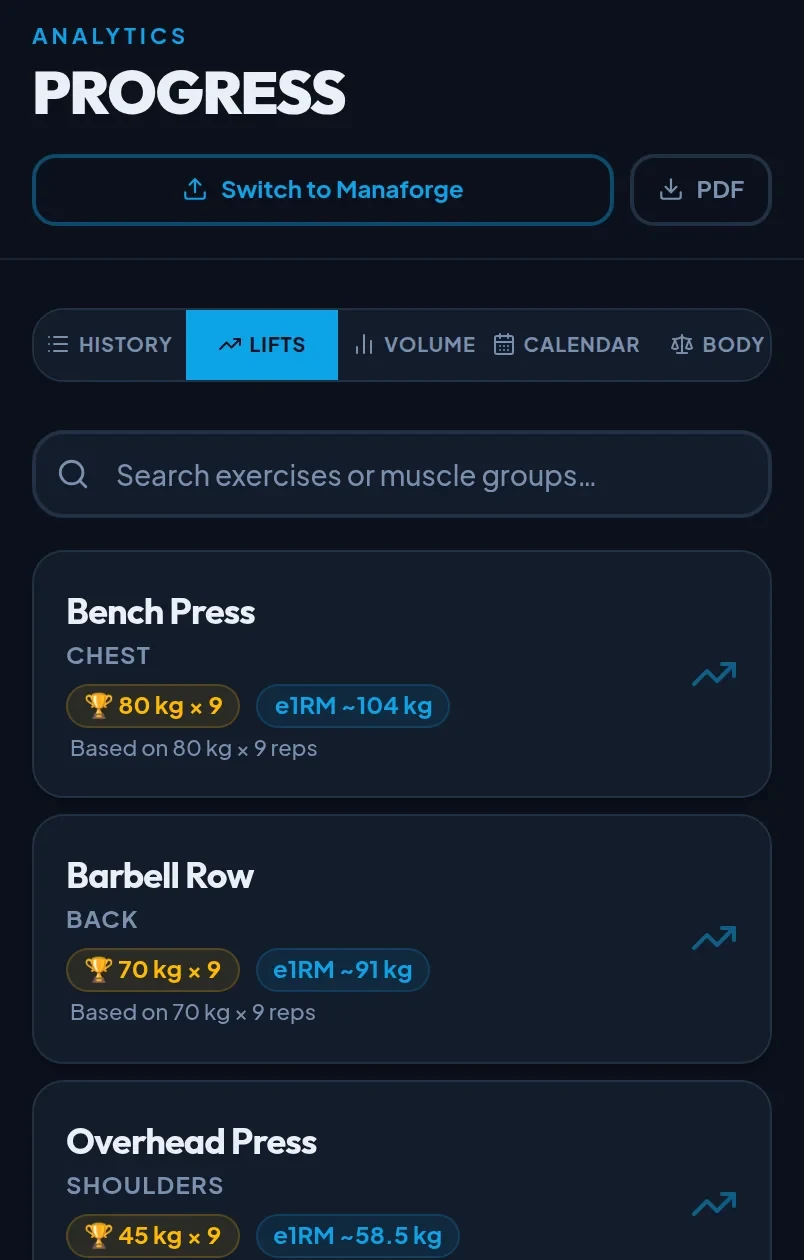
The workflow
Give change enough time to mean something.
One measurement can be noisy. A consistent history gives you a more grounded way to ask what is changing and what stayed the same.
Choose what matters
Follow the progress measures relevant to your own goals instead of collecting numbers for their own sake.
Log consistently
Keep entries dated and use a repeatable approach, so future-you knows what each observation represents.
Look across records
Review the longer-term picture with your logged training, food and wellness context nearby.
The long view
A record of the process, not just the outcome.
Training volume, eating patterns, recovery and life all change. A private progress record helps you see when things shifted, so the next decision starts with more than a hunch.
Dated history
Return to earlier observations.
Trend review
Look beyond a single reading.
Training context
Keep sessions near outcomes.
Personal perspective
Track what is useful to you.
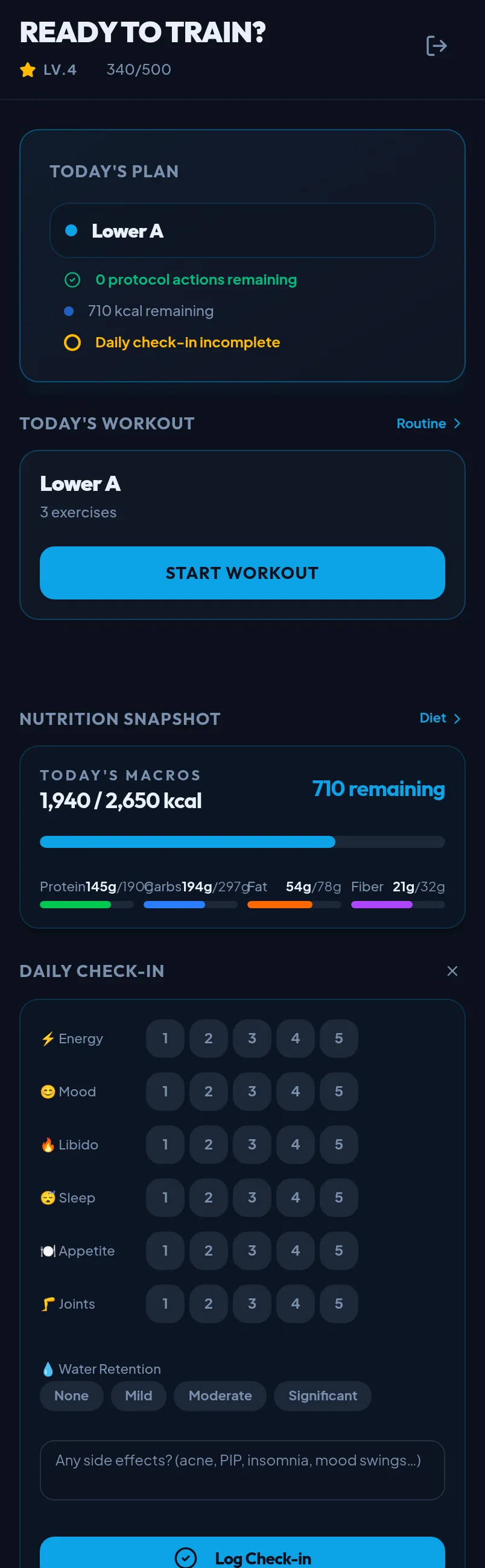
Use judgment
Trends invite questions, not conclusions.
When a number moves, consider timing, consistency and other logged changes. Progress tracking can help organize your observations; it cannot establish why a change happened or evaluate a medical concern.
Frequently asked
Progress tracking FAQ
What can I use progress tracking for?
Use it to keep a dated view of changes relevant to your goals and review those observations alongside your training and nutrition history.
Should I react to a single data point?
Usually it helps to review a series of entries and the circumstances around them. One reading can be affected by timing or measurement conditions.
Is this a medical monitoring tool?
No. Manaforge organizes your personal athlete records; it does not diagnose, treat or monitor medical conditions.
Further reading
Related Research Notes
Look further back
Make room for the whole story.
Put your progress next to the habits, sessions and observations that surround it.