Peptide Reconstitution & Injection
Powder to measured dose: mixing with bacteriostatic water, picking the right needles, using vial spikes, and a calculator that does the unit math for you.
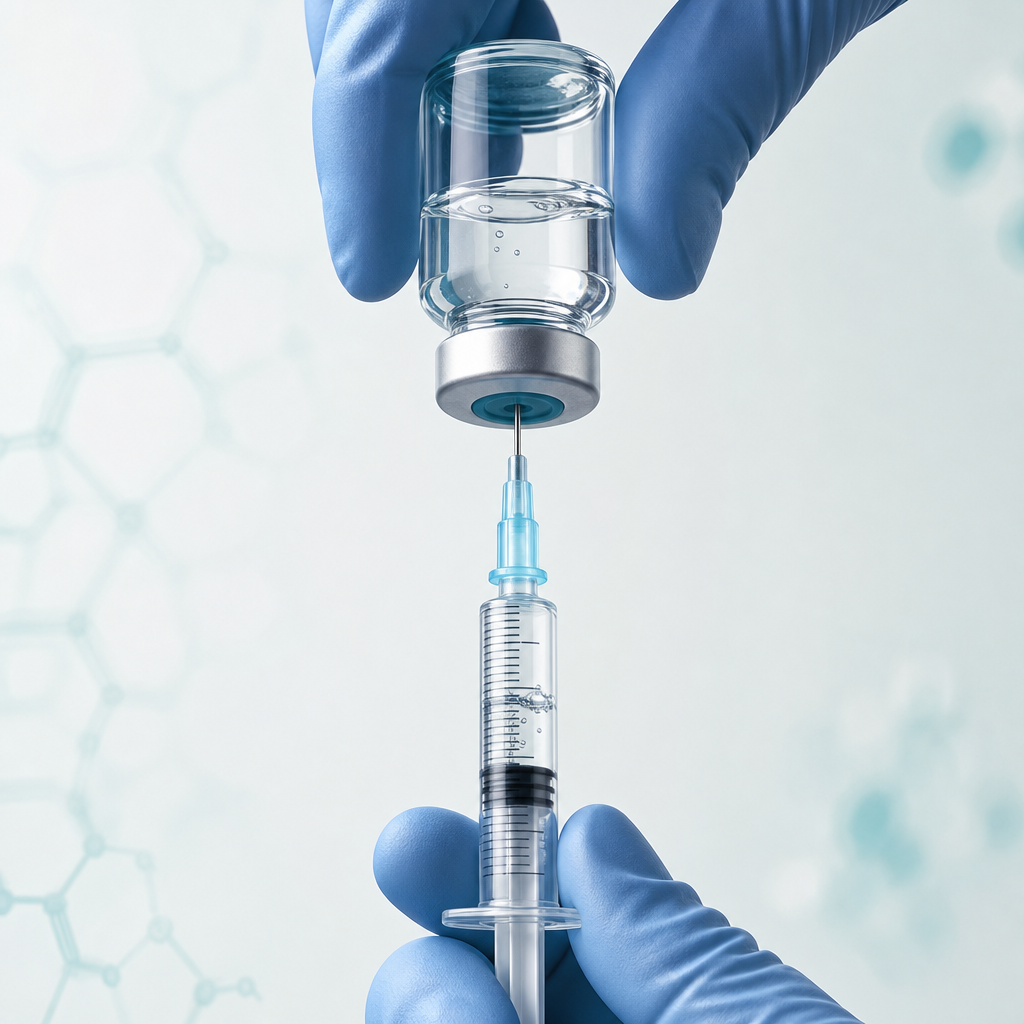
What "reconstitution" means
It's just mixing a dry powder with a liquid so you can measure and draw it. The peptide amount never changes — you only choose how much water to spread it across. More water = more dilute = more units per dose; less water = the opposite.
Start with the powder
Peptides arrive freeze-dried (lyophilized) — a small cake or film at the bottom of the vial. Stable dry, but you can't measure a powder, so it has to be dissolved first.
Add bacteriostatic water
Draw bacteriostatic water (sterile water with benzyl alcohol to stop bacterial growth) and inject it slowly down the inside wall of the vial — never blast it straight onto the powder.
Swirl, don't shake
Gently swirl or roll until the solution turns clear. Hard shaking can damage the peptide. Once mixed, most peptides are stored in the fridge.
Do the math
The amount of water you add sets the concentration, which decides how many units you draw. The calculator below handles that conversion.
Reconstitution Calculator
Enter your vial size, the water you're adding, and the amount you want per draw. We'll show the concentration and units on a standard U-100 insulin syringe.
Printed on the vial label (the "10mg" badge).
How much liquid you're mixing in. Your choice.
The amount you want in each draw. 1 mg = 1,000 mcg.
Results
Syringes & needles
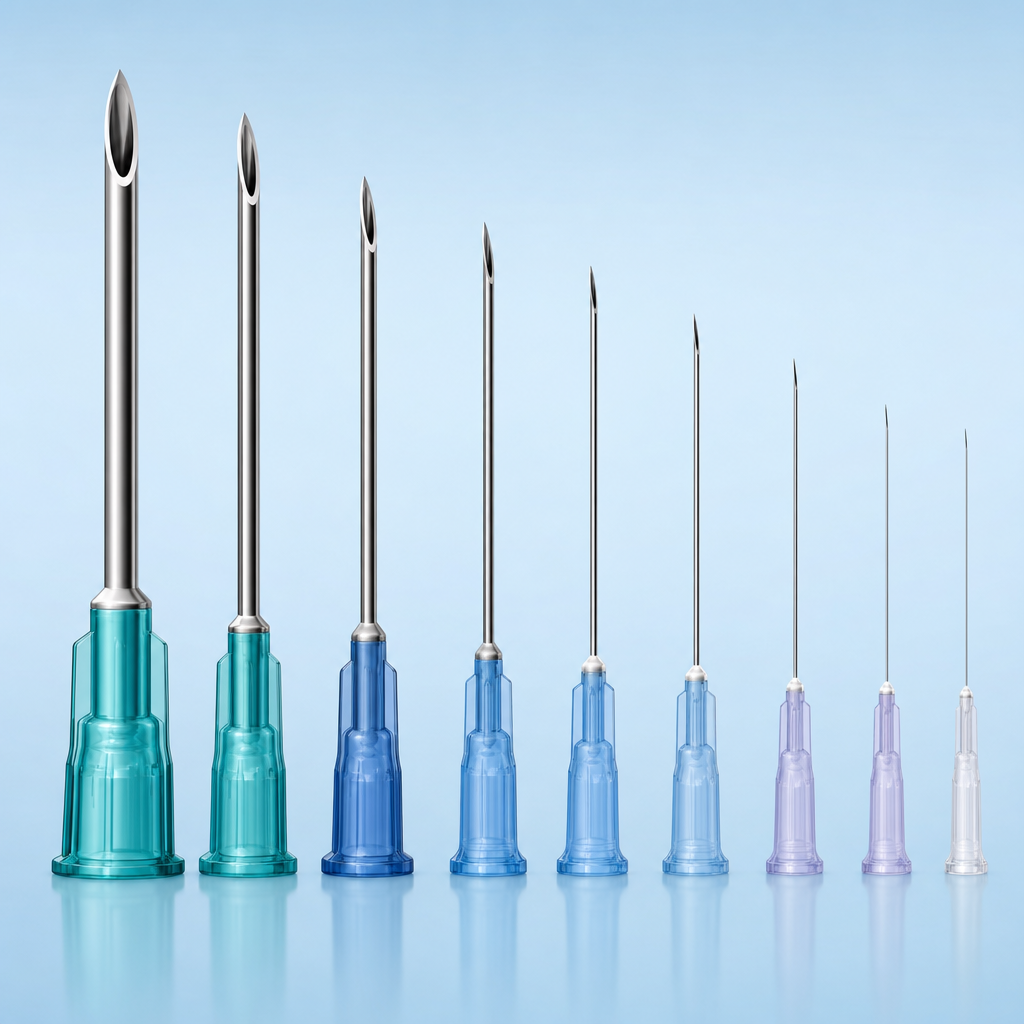
Gauge (G) is needle thickness — the higher the number, the thinner the needle. Peptides are watery, so thin needles work fine for injecting.
The all-in-one insulin syringe
For most water-based peptides, a U-100 insulin syringe with a fixed 29G–31G needle both draws and injects. Simple, precise, and low-discomfort for subcutaneous use.
Two-needle method (optional)
Some prefer a wider drawing needle to pull solution up fast, then swap to a thin one to inject. Coring the stopper less is the main benefit.
Wider bore pulls solution up quickly. Never inject with these — they're for filling only.
A solid all-rounder for subcutaneous draws. Slightly quicker fill than finer needles.
The finest, most comfortable for SubQ. Standard on insulin syringes.
Vial spikes & adapters (if you prefer)
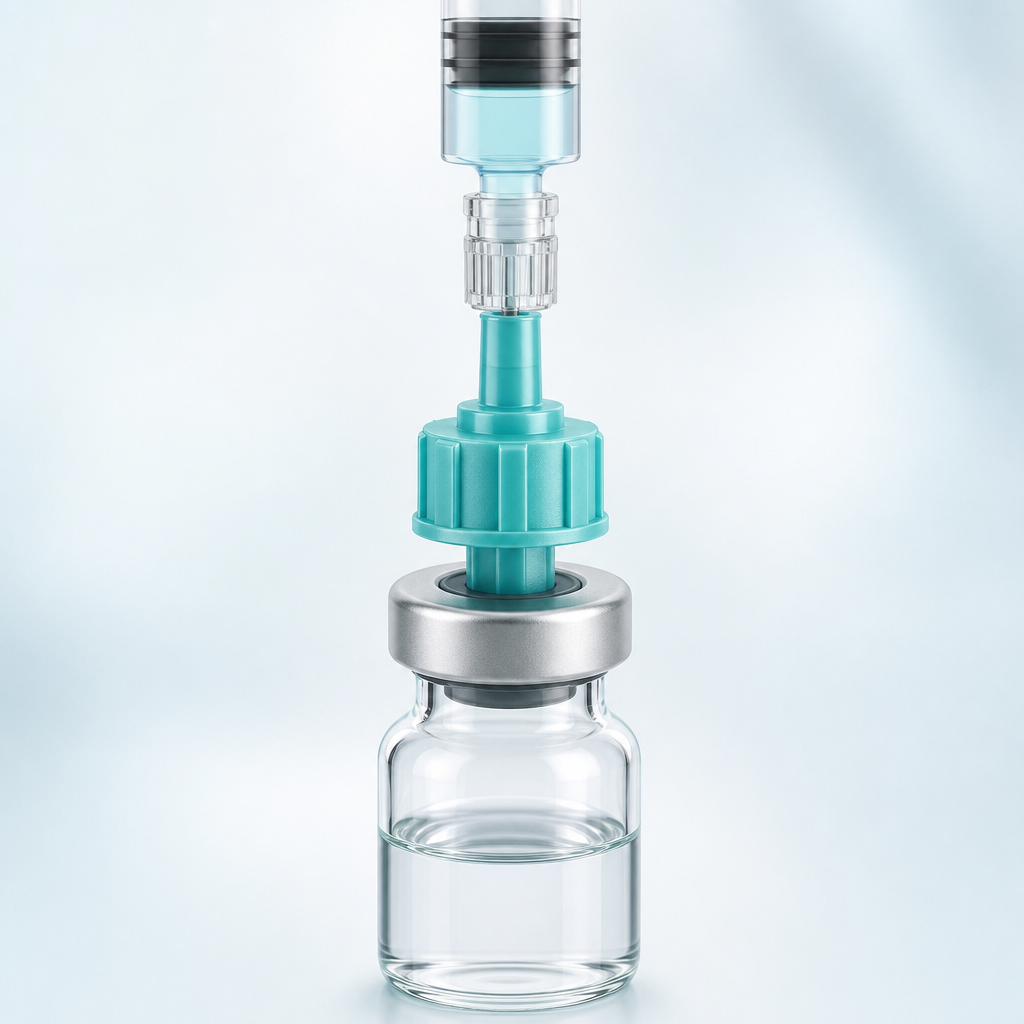
A vial spike is a plastic adapter that presses into the stopper once and gives you a luer port on top. Instead of piercing the rubber every time, you just twist a syringe on and off.
- ✓No repeated stopper punctures — less coring and fewer rubber bits in solution.
- ✓Faster, cleaner draws when you dose frequently from one vial.
- ✓Many include a vented filter for smooth pressure equalization.
- ✓Twist a luer lock syringe straight on — no needle needed to draw.
Subcutaneous (SubQ), the usual route
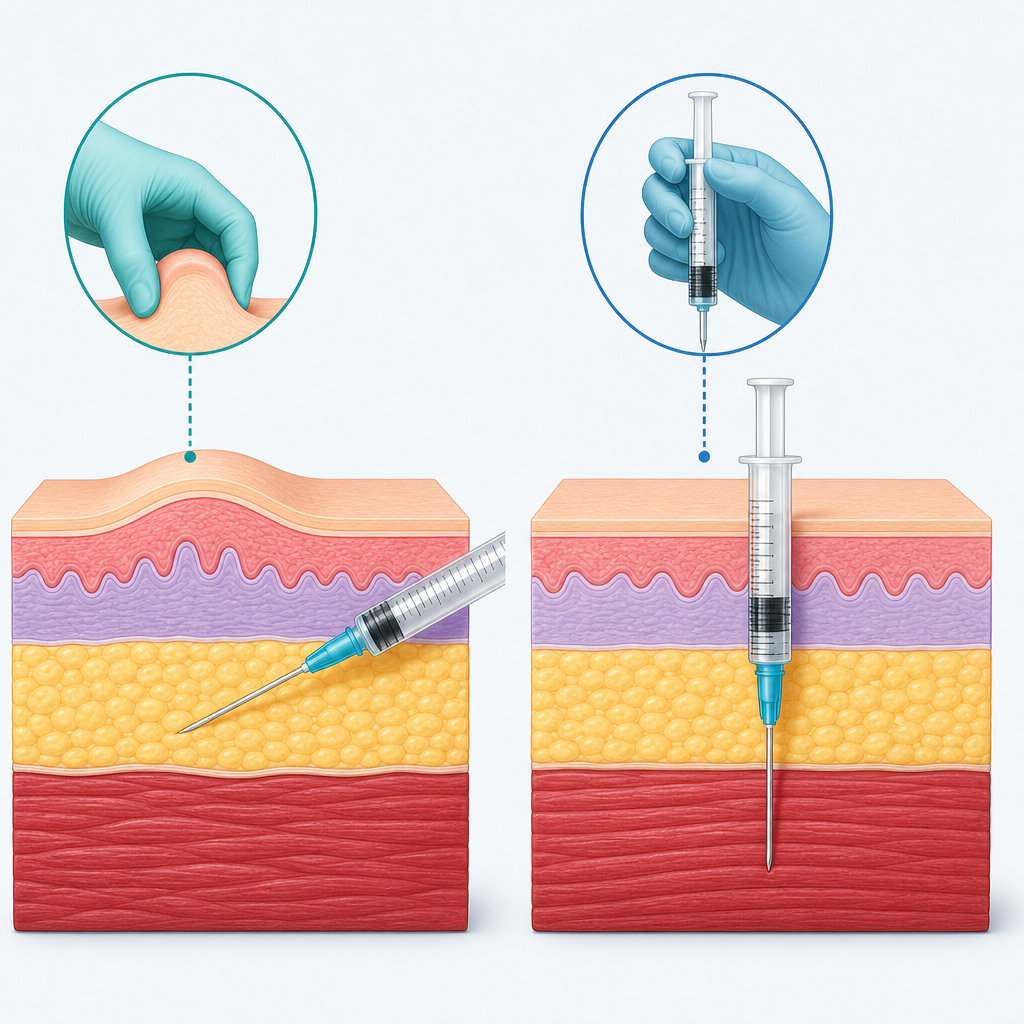
Most water-based peptides go subcutaneous — into the fat layer just under the skin. Pinch a fold (belly is common), insert the fine needle at roughly 45–90°, and depress the plunger slowly.
Wipe the stopper and the site with alcohol first, use a fresh needle each time, and dispose in a sharps container. Injecting oils instead? Those go intramuscular — see the oils guide below.
Working with oil-based compounds?
Oils are pre-mixed and injected intramuscularly with different needles. We have a dedicated guide.
Oil Injection GuideThis guide and calculator perform volume math and explain equipment only — they do not recommend any amount. Manaforge Labs products are sold for research and educational purposes only.