Oil-Based Injection Guide
No mixing required. How to warm and draw oil solutions, pick the right needle gauges, use vial spikes, and inject intramuscularly — step by step.
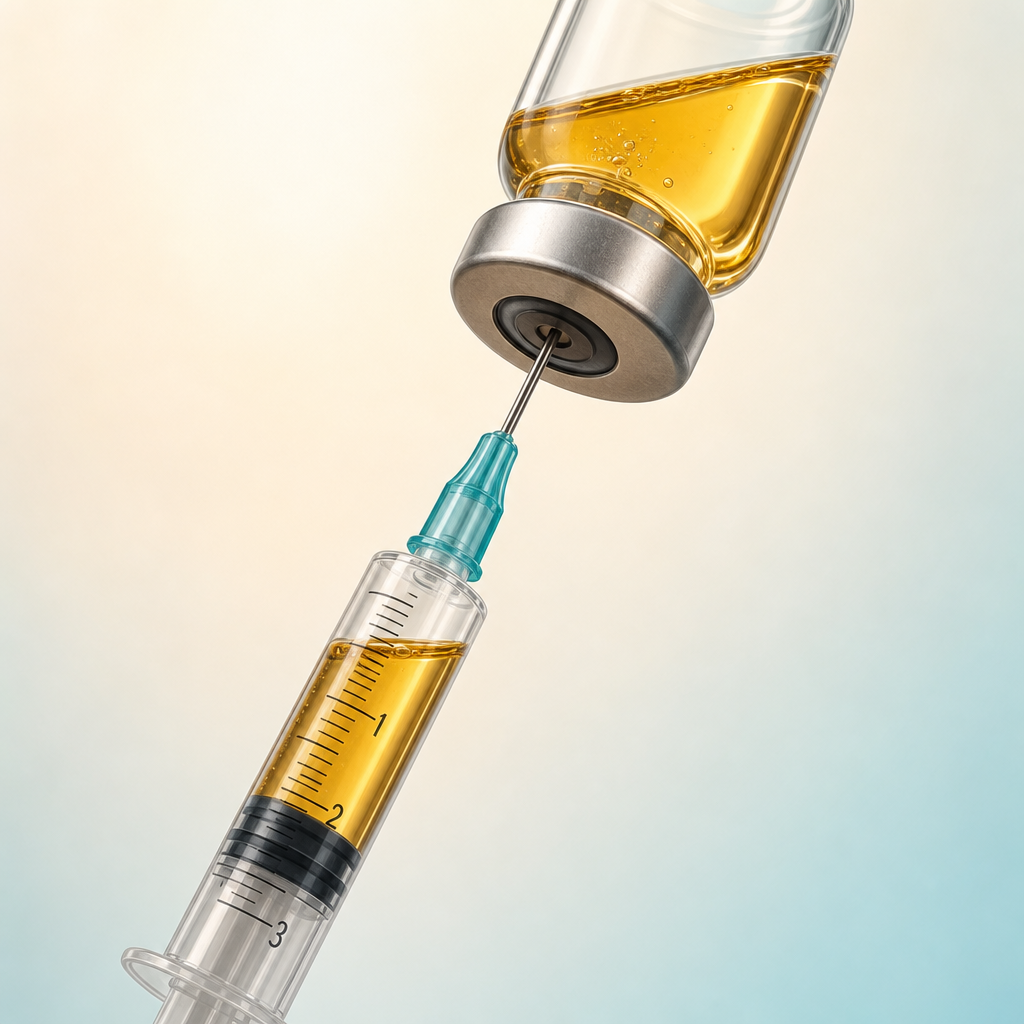
Oils skip the mixing step
Unlike peptides, oil-based compounds arrive already dissolved in a carrier oil — there's no powder to reconstitute. The work is all in the handling: warm it so it flows, draw with a wide needle, and inject into muscle with a finer one.
It's already mixed
Oil-based compounds ship as a ready-to-use solution suspended in a carrier oil (like MCT, grapeseed, or cottonseed). No reconstitution — no powder, no water. You draw and inject directly.
Warm if it's thick
Cold oil is viscous and hard to push. Roll the vial between your hands or sit it in warm (not hot) water for a couple minutes so it flows easily through the needle.
Draw with a wide needle
Oil moves slowly through fine needles, so fill the syringe with a wider-gauge drawing needle. Wipe the stopper with alcohol first and draw a touch more than you need.
Swap to an injection needle
Twist off the draw needle and put on a fresh, finer injection needle. Tap out air bubbles and push the plunger until a drop appears at the tip.
Syringes & needles
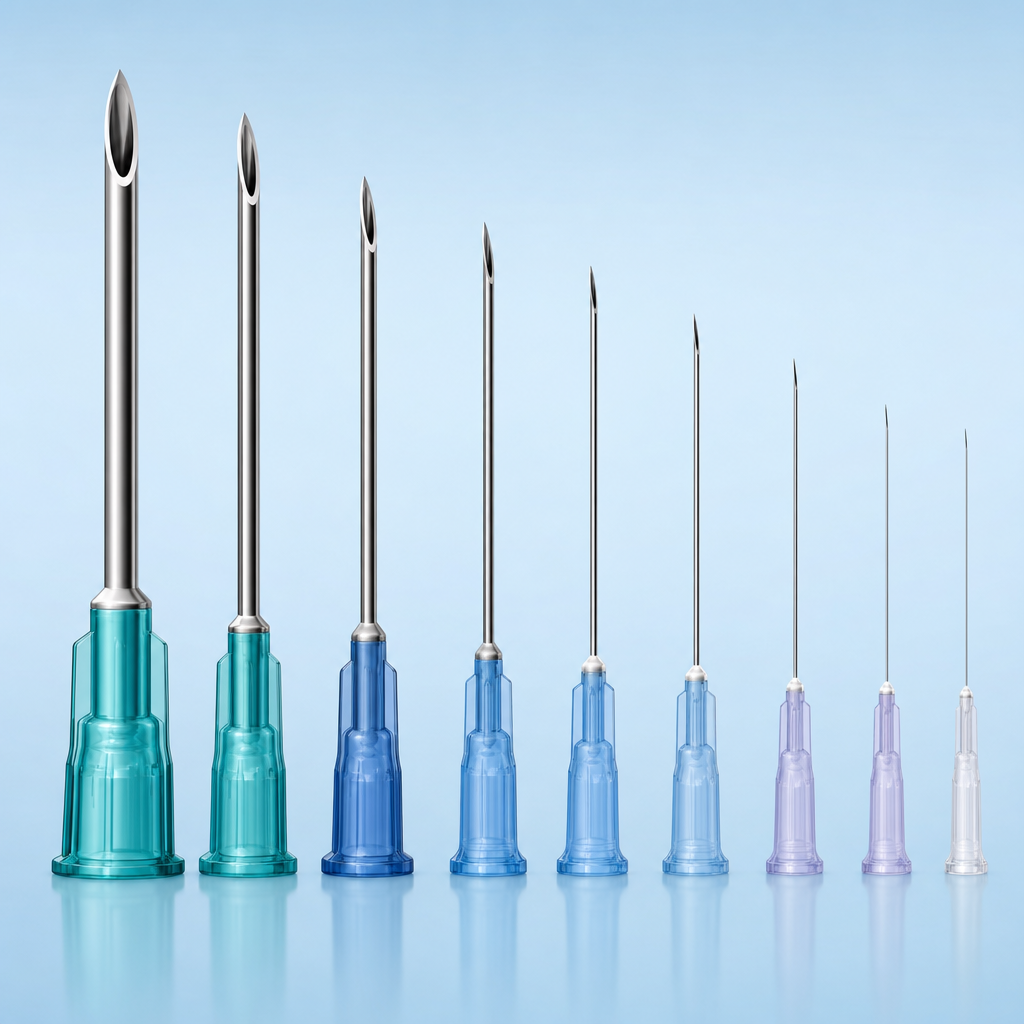
Gauge (G) is thickness — higher number, thinner needle. Oil is viscous, so you draw with a wider needle than you inject with, and use a bigger barrel than peptides.
Barrel size
A 3 mL syringe is the common choice for oils — room to draw and inject typical IM volumes with a luer lock tip so the needle can't blow off under the pressure oil needs.
Two needles, always
Draw fast with a wide needle, then inject with a fresh finer one. The drawing needle dulls as it pierces the stopper — a fresh injection needle is sharper and more comfortable.
Wide bore pulls thick oil up quickly. For filling the syringe only — never inject with it.
The workhorse for intramuscular oil. 1 to 1.5 inch length reaches muscle in most sites.
Only comfortable with thinner carrier oils or smaller volumes; thick oil pushes very slowly.
Vial spikes & adapters (if you prefer)
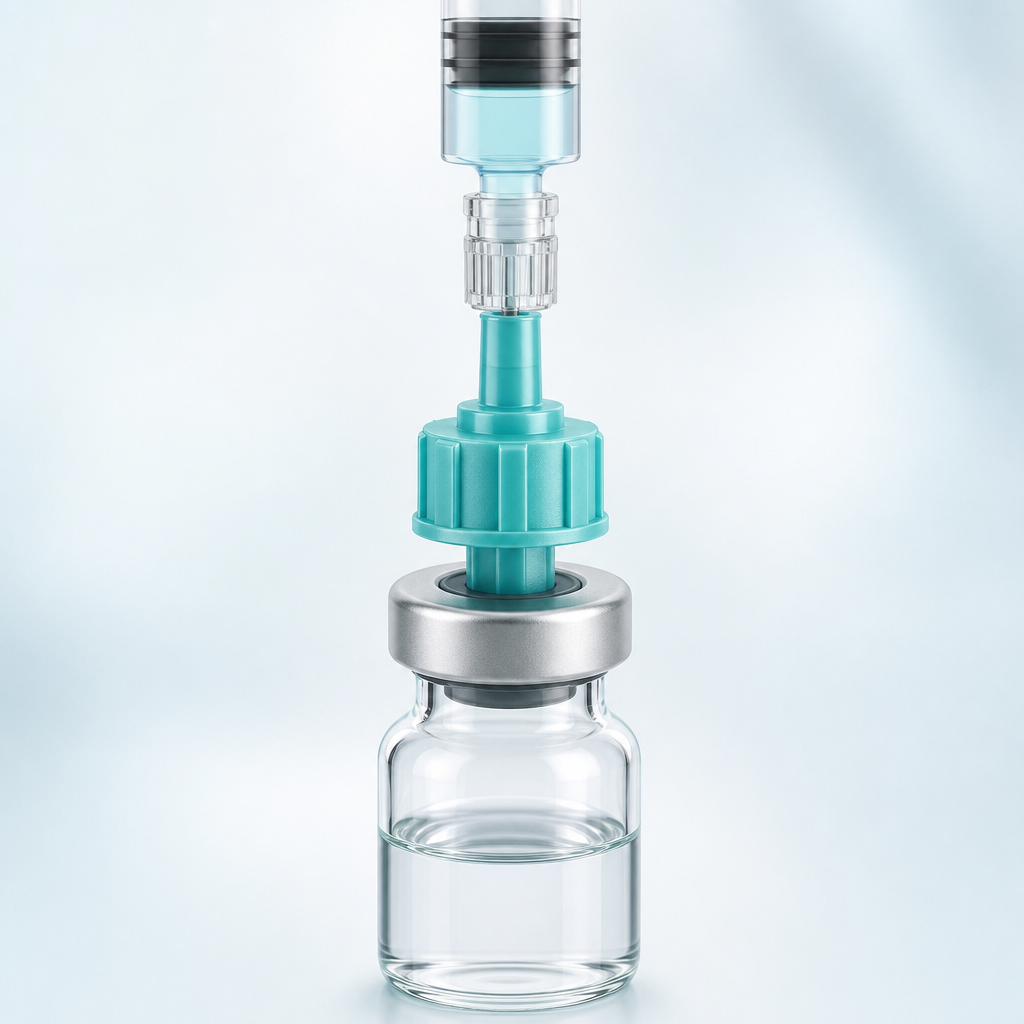
A vial spike presses into the stopper once and gives you a luer port on top, so you twist a syringe on to draw instead of piercing the rubber each time. Handy when you draw repeatedly from a multi-use oil vial.
- ✓No repeated stopper punctures — less coring, cleaner oil.
- ✓Faster draws without a separate drawing needle.
- ✓Vented filter versions equalize pressure smoothly with thick oil.
- ✓Still swap to a fresh injection needle before injecting.
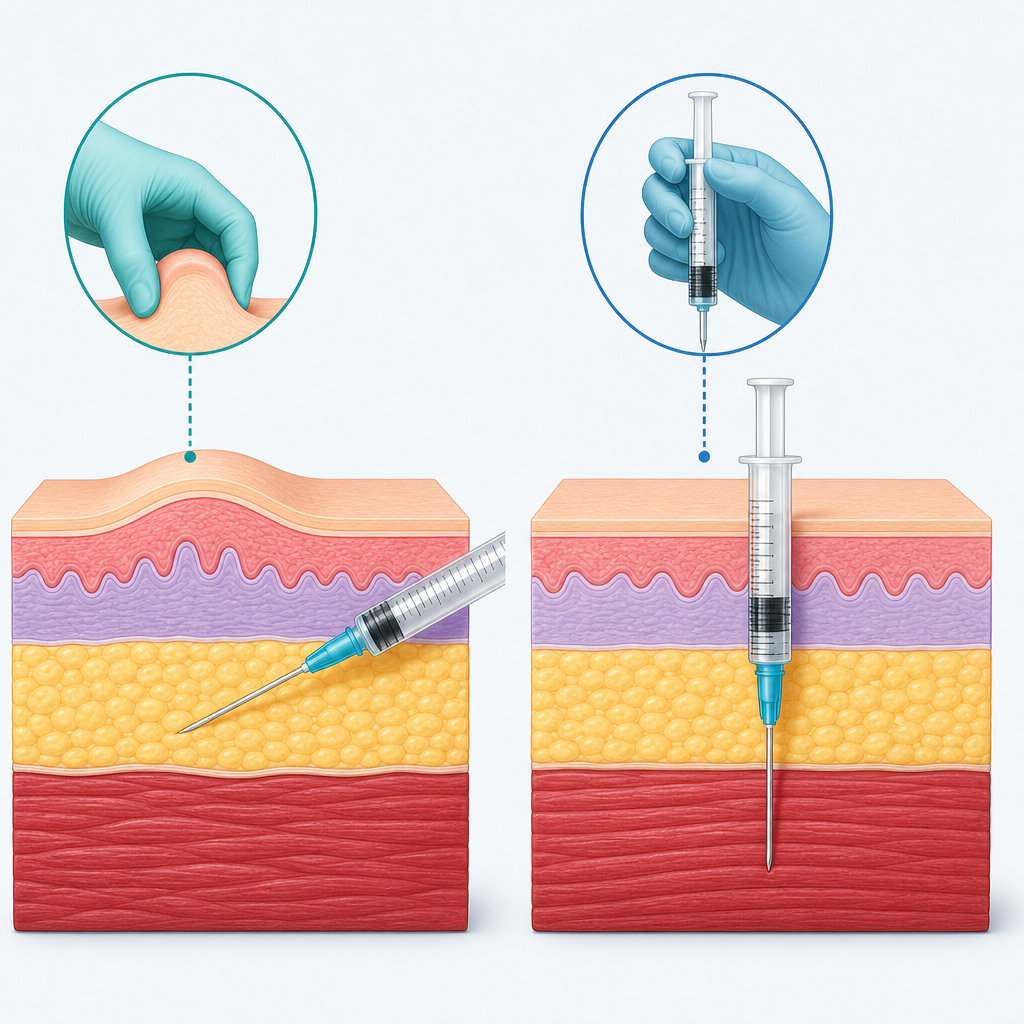
Intramuscular (IM), the oil route
Oils are injected into muscle, deeper than a peptide's subcutaneous shot. The muscle's blood supply lets the body absorb the oil depot gradually. Insert the injection needle at 90°, steady and controlled.
Clean the site with alcohol, push the plunger slowly (oil takes longer than water), withdraw, and apply light pressure. Use a fresh needle every time and dispose in a sharps container.
Do
- ✓Warm thick oil so it flows without forcing the plunger.
- ✓Draw with a wide needle, inject with a fresh finer one.
- ✓Wipe the stopper and the injection site with alcohol.
- ✓Inject slowly and steadily into muscle; dispose in a sharps bin.
Don't
- ✕Don't inject oils subcutaneously — they're intended for intramuscular use.
- ✕Don't reuse or inject with the wide drawing needle.
- ✕Don't overheat the vial — warm, never hot.
- ✕Don't rush the plunger; oil needs a slow, even push.
Working with peptides instead?
Peptides come as powder and need reconstitution. That guide has an interactive units calculator.
Peptide Reconstitution GuideThis guide explains equipment and technique only and does not recommend any amount. Manaforge Labs products are sold for research and educational purposes only.